Flaky Homemade Sourdough Croissant Recipe with FMF Option
Here you’ll learn how to make your own homemade sourdough croissants. You can make these with either all purpose flour or fresh milled flour, both turn out to become flaky, buttery goodness. These croissants are great for egg sandwiches, chicken salad sandwiches, or even plain ole jelly. To make even the best sourdough croissants, you only need some basic ingredients. And taking the time to chill the dough between folds really helps to bring out those flaky layers!

I won’t lie, making homemade sourdough croissants was extremely intimidating the first time I made them. The instructions are always a mile long and there were random words I didn’t completely understand. But once you make them once, you see how they’re actually easy to make and just take some time and patience.
Using an active starter instead of commercial yeast brings out a more delicious flavor in my opinion. Sourdough naturally creates a flaky crust while also supporting easier digestion thanks to fermentation. Fresh milled flour actually performed beautifully, and I was shocked by how soft, workable, and smooth my dough stayed.
And yes, the lamination process takes patience, but it is absolutely doable. If you’ve seen people on social media making croissants and thought, “There’s no way,” I promise you can. If I can do make homemade sourdough croissants, you can too!
understanding the butter block (for total beginners)
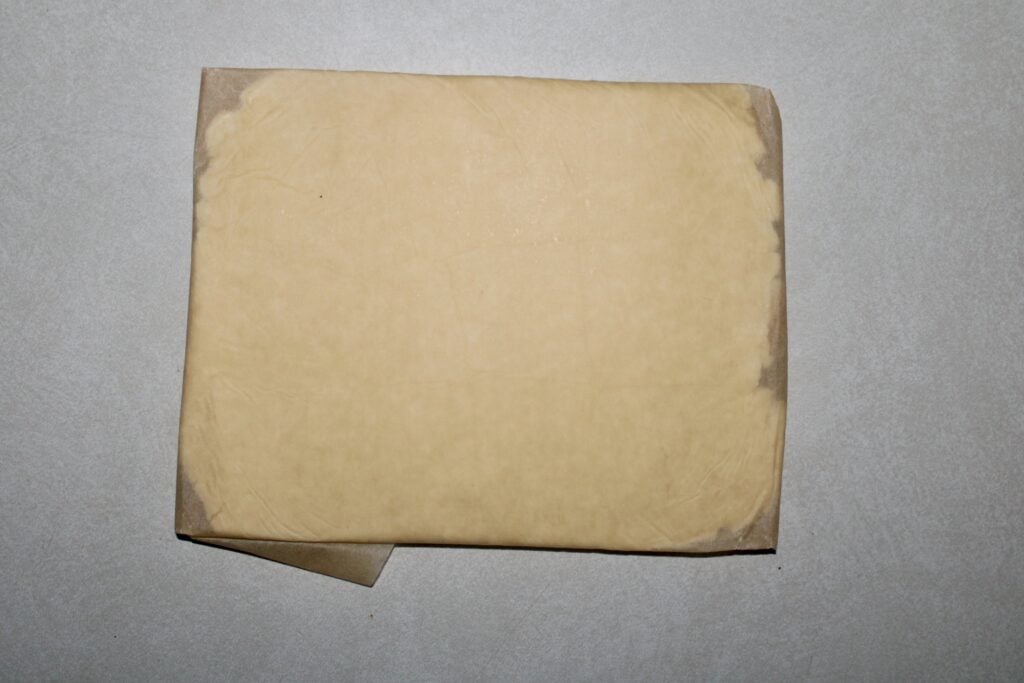
If you are new to laminated dough, the butter block is one of the most important parts, but it’s also much simpler than people make it sound. Here’s what you need to know:
- The butter block is simply a rectangle of cold, flattened butter.
- Its only job is to create those flaky layers inside your croissants.
- You want the butter and the dough to be the same consistency. In this case, both firm, cold, and bendable, not hard and not soft.
- If the dough is soft and the butter is hard, the butter will crack.
- If the dough is firm and the butter is too soft, it will squish and leak out.
- When they match, the rolling and folding is easy and the layers stay clean.
how to make the butter block
Place cold butter between two pieces of parchment paper. Gently tap it with your rolling pin to flatten it, then roll it into a rectangle. Pop it back in the fridge so it stays cold while the dough chills. That’s it!
instructions
make the dough
Mix the croissant dough ingredients until smooth, then let it rest. The dough should be soft but not sticky. Chill it until firm — cold dough makes lamination so much easier.
make the butter block
Flatten cold butter between two sheets of parchment. Roll into a rectangle with straight sides. Refrigerate so it stays cold and flexible.
laminate the dough
Wrap the butter block inside the dough, roll it out, and complete the folds. A first fold, a quarter turn, and a book fold create the butter-dough layers. Chill between folds to keep everything cold.
shape the croissants
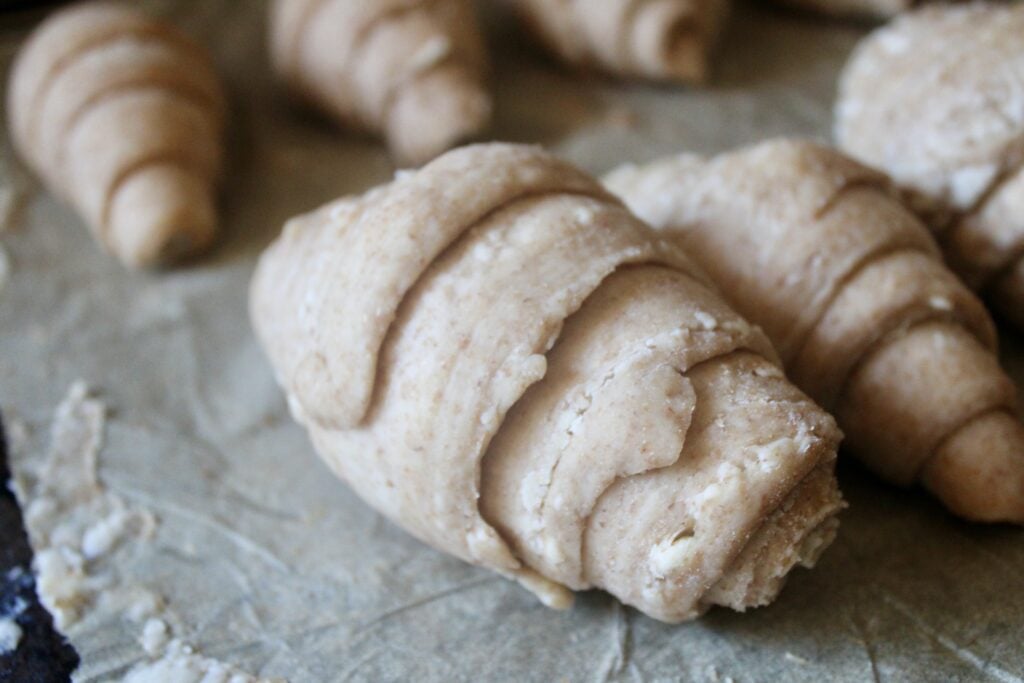
Cut long triangles, stretch the tips gently, and roll them tightly into that classic crescent shape. Place on a baking sheet lined with parchment.
proof
Let the shaped croissants sit in a warm spot until puffy. They should look airy but not melted. Chill again briefly while the oven preheats.
bake
Brush with egg wash, bake until deep golden, and enjoy the best homemade croissants you will ever make.
FAQs
Why does everything need to stay cold?
Cold keeps the butter inside the dough instead of melting out. This is what creates flaky layers. If the dough or butter warms up, the layers will blur together. Chilling between folds gives you clean, defined layers.
How do I know if my croissants have proofed long enough?
They should be noticeably puffier and feel full of air when you gently touch them. They should not look melted or greasy. If they seem too soft, refrigerate them for a few minutes before baking.
Can I freeze sourdough croissants?
Yes! You can freeze them right after shaping. Place them on a sheet pan, freeze until solid, then store in a freezer bag. When ready to bake, thaw overnight in the fridge, proof, and bake as usual.
Why is the flour measured in grams?
How much flour each scoop has depends on quite a few factors: how the grain was milled, how tightly packed it is, etc. For the most consistent results, measure the flour in grams. It really does make a difference in your recipes!
you may also like…
Sourdough Croissants (with Fresh Milled Flour Option)

These flaky sourdough croissants are perfect for breakfast, brunch, or lunch! Top with jelly, a fried egg, or chicken salad. This recipe includes a classic all purpose flour option or a fresh milled flour + AP flour option too.
Ingredients
Coissant Dough
- 600g flour - Option 1 (classic): All-purpose flour Option 2 (FMF): 400g fresh-milled hard white or hard red wheat + 200g AP flour (needed for structure) (≈ about 4¾ to 5 cups total, depending on grind — see FAQ below)
- 65g sugar = ⅓ cup
- 12g salt = 2 tsp
- 60g active sourdough starter (100% hydration) = ¼ cup
- 205g water (room temp) = ⅞ cup
- 112g whole milk (room temp) = ½ cup
- 56g unsalted butter, cold and cubed = 4 Tbsp
Butter Block
- 340g European-style butter = 1 ½ cup
Egg Wash
- 1 egg yolk
- 1 tbsp heavy cream or milk
Instructions
Mix Dough
- Add flour, sugar, salt, sourdough starter, milk, and water to a stand mixer.
- Mix 1 minute, then add the 56g cold butter
- Mix 3–5 minutes until smooth and slightly tacky.
- Transfer to a bowl, cover, and let rise 3–6 hours at room temp until ~1.5×.
- Refrigerate at least 4 hours or overnight.
Make the Butter Block
- Once the dough has been refrigerated, create your butter block. Place cold butter on parchment and form into an 8×8 inch square using the folding-paper method.
- Chill until firm but pliable.
Lamination
- Remove dough from fridge and shape into a square.
- Wrap or place in an airtight container and freeze 20 minutes (ensures clean layers).
- Roll dough into a 16×8 inch rectangle.Place 8×8 butter square in center.
- Fold top and bottom flaps over to meet in the middle.
- Seal edges completely.
- Rotate dough so seams are vertical. Roll to a 24×8 rectangle. Trim ends.
- Fold like a book: short ends to center with a small gap between. Fold the dough in half.
- Wrap + chill 15 min in freezer
- Roll to another 24×8 rectangle
- Fold in thirds. Freeze 15 min
- Roll into a 14×17 inch rectangle. Freeze 20 min
Shape
- Roll dough to 17×14, then trim to 16×14.
- Cut into four 4×14 strips. Split each strip diagonally into 8 long triangles.
- Gently lengthen triangles, widen base to 3 inches.
- Roll tightly from base to tip.
- Place on lined sheet. Proof fro 4-6 hours until nearly doubled.
Bake
- Refrigerate croissants for 20 minutes while the oven preheats.
- Preheat oven to 375°F.
- Brush tops with egg wash.
- Bake 15 minutes, rotate pan, bake 10–15 more until deep golden.
- Cool fully before eating.
Notes
- how you scoop
- how fine your fresh milled flour is
- whether you sift
- You can use regular butter. However, European butter is higher fat, so the layers stay cleaner and stretch more smoothly.
Note on flour conversion: 600g flour = about 4¾ to 5 cups, depending on:
This is why flour should be measured in grams for the most best results.